
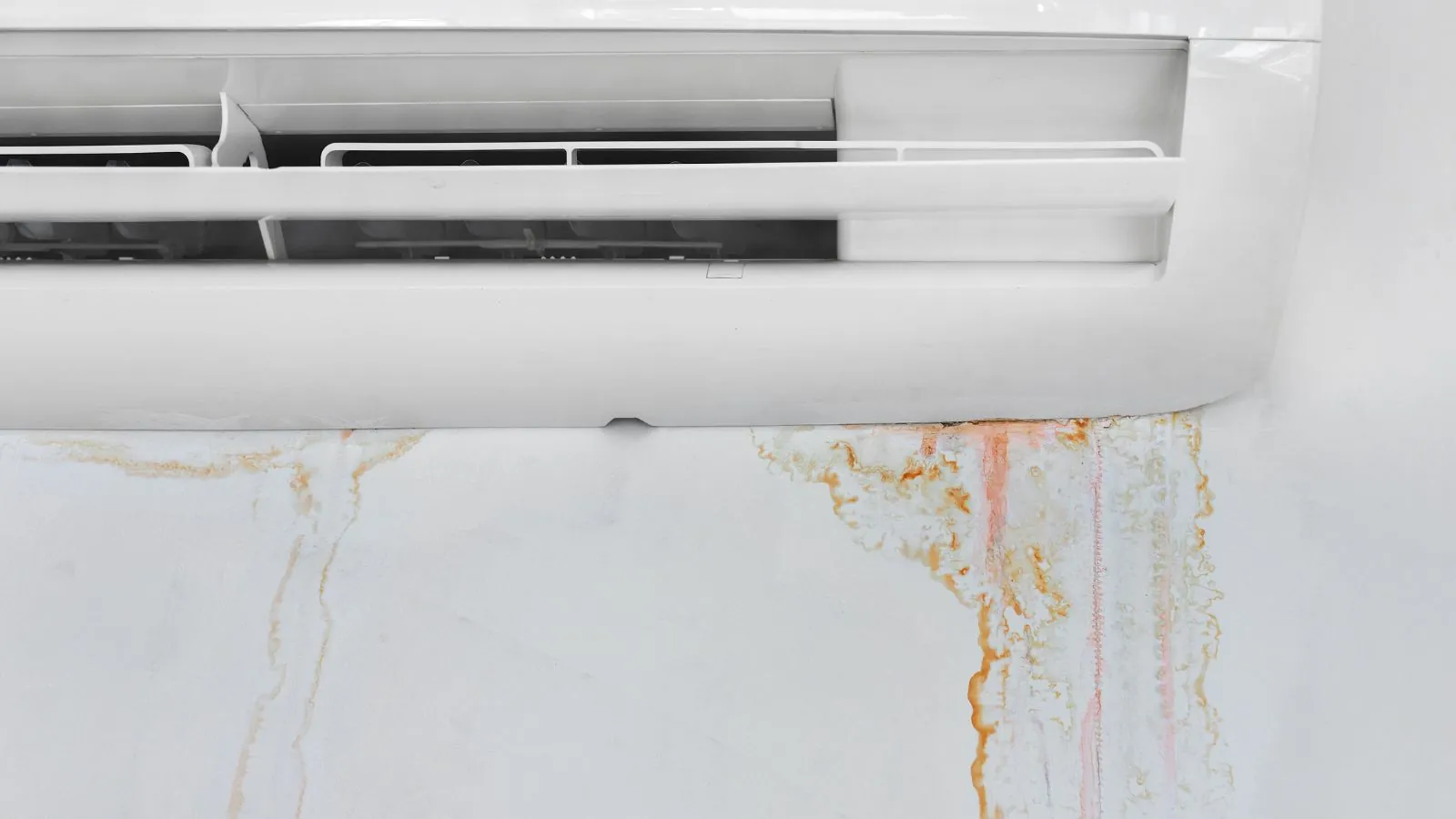
How an AC leak reaches your ceiling or closet
Air conditioners pull moisture out of the air and send it away through a condensate line. When that line clogs or the drain pan rusts through, water has nowhere to go but into the closet, attic or ceiling around the air handler. In Round Lake, IL a summer of heavy use can turn a small clog into a soaked ceiling.
Turn the AC off at the thermostat so the unit stops making more condensate. Look for water at the air handler, in the drain pan or on the ceiling below it. If the ceiling is bulging, stay out from under it and read the ceiling page before you do anything else.
Where AC water ends up
Attic air handlers drain into pans that sit above finished ceilings, so a clogged line shows up first as a stain in a bedroom or hallway. A closet unit leaks into the carpet or the wall base. A window unit leaks along the wall under it. A rooftop unit on a commercial building leaks through the roof deck.
The crew traces the wet path with a moisture meter and thermal imaging camera, removes wet insulation and drywall where needed and dries the space. An HVAC technician clears or replaces the line and pan, because drying will not hold if the unit keeps leaking.
| Sign | Likely cause | Next step |
|---|---|---|
| Water in the drain pan | Clogged condensate line | Turn off the AC, call an HVAC technician |
| Ceiling stain under an attic unit | Overflowing or rusted drain pan | Dry the ceiling, replace the pan |
| Wet carpet near a closet unit | Blocked line or failed float switch | Extraction and carpet check |
| Ice on the coil, then water | Airflow or refrigerant problem | HVAC service before restarting |
Turn the AC off, then call. Tell the dispatcher where the unit sits relative to the wet area.
What cleanup involves
Because AC water is usually clean condensate, many materials can be dried in place. Insulation is the exception, since wet insulation holds water against the drywall. Ceiling drywall that has sagged or stained is usually cut out, and the cavity is dried before new drywall goes in.
Condensate that sat in a pan for a long time can carry microbial growth, so a musty smell should be checked. Ask for the scope in writing before work starts.
What changes the cost of AC leak repair
The scope and price are explained before work starts.
Insurers often treat a sudden drain-pan failure differently from long-term maintenance neglect. Ask your insurer how your policy reads.
Preventing the next condensate leak
Most AC leaks trace back to a line that clogged with algae and dust. A technician can flush the condensate line at the start of the cooling season, check that the drain pan is intact and confirm the float switch shuts the system off when water backs up. That switch is a cheap part that turns a messy overflow into a stopped unit.
Some owners pour a small amount of distilled vinegar into the access port on a schedule the technician recommends. Ask before doing it, because some systems and pan materials call for a different approach. A secondary drain pan under an attic air handler gives the water somewhere to go if the primary line fails.
When the leak is not condensate
Not every wet spot near an air handler is condensate. A frozen coil that thaws can release a lot of water at once, and a refrigerant or airflow problem is the cause. A leaking humidifier line, a supply line near the unit or a roof leak above an attic can all look the same from below.
That is why the first step is tracing the water rather than assuming. A moisture meter on the ceiling and a look at the pan tell the crew whether the line, the coil or something else is wet. The answer decides whether the repair belongs to an HVAC technician, a plumber or a roofer.
How the S500 reference treats this water
Condensate from an air handler is usually clean at the moment it leaks, but a drain pan or line that has stood for weeks can carry slime and growth. The S500 sorts water by contamination level, and that sorting is why a long-neglected drain pan is treated more carefully than a fresh supply leak.
The ANSI/IICRC S500 Standard for Professional Water Damage Restoration is a published industry reference. It is cited here for background and is not a credential held by this site.
Serving Round Lake and nearby
The same line covers Ingleside, Fox Lake, Antioch, Island Lake and Spring Grove. Homes with attic air handlers show the damage in upstairs ceilings, and homes with closet units show it in the floor below. See the Antioch page for nearby notes.
AC leak questions
Why is my AC leaking water inside?
The usual cause is a clogged condensate line or a corroded drain pan. A technician clears the line, and the crew dries what got wet.
Is AC leak water dirty?
It is usually clean condensate, but standing water can develop odor and growth. A crew checks with a moisture meter.
Can I run the AC while the ceiling dries?
Not until the leak is fixed. Running it keeps making condensate.
Does insurance cover AC leaks?
Sudden failures are often covered, while maintenance issues often are not. Ask your insurer.
The line is answered around the clock. Describe what happened and what you can see.