
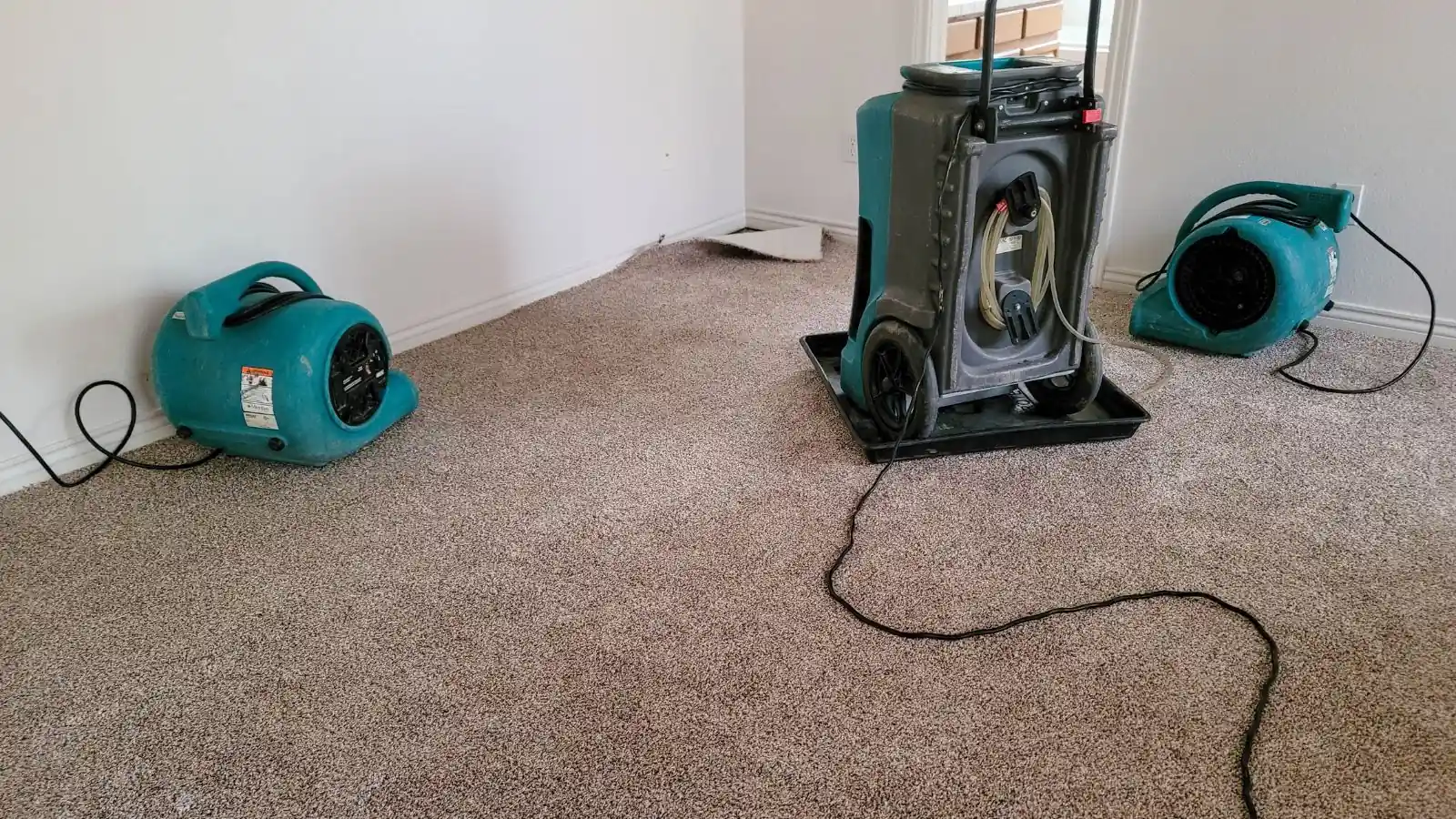
Why drying is a separate step
Structural drying is the controlled removal of moisture from the materials of a building after the standing water is gone. In Round Lake, IL a floor can feel dry while the subfloor, the base of the walls and the insulation inside them still hold water. That hidden moisture is what leads to swollen trim, odor and mold.
Drying equipment works by moving air across wet surfaces and removing the humidity from the room. Air movers push air over materials, and dehumidifiers pull the water out of that air so it can pick up more. Nothing about it is quick, and the ANSI/IICRC S500 standard describes the principles crews follow.
How crews know when it is dry
Moisture meters give readings in wood, drywall and concrete, and a thermal imaging camera shows temperature differences that can mean hidden water. The crew sets a dry standard from unaffected materials in the same home and compares each wet area against it.
Readings are logged each visit. Equipment stays until wet materials match the standard, and then it is removed. If the readings stop falling, the crew checks whether a source is still wet or whether a wall cavity needs to be opened.
| Equipment | What it does | Where it is used |
|---|---|---|
| Air mover | Moves air across wet surfaces | Floors, wall bases, carpet |
| Low-grain refrigerant dehumidifier | Removes humidity from the air | Whole-room drying |
| Desiccant dehumidifier | Dries air in cool or low-humidity conditions | Cold basements and crawl spaces |
| Wall cavity drying system | Pushes dry air into wall cavities | Behind baseboards and drywall |
| Moisture meter | Reads moisture in materials | Every visit |
Call and describe what got wet and how long ago. The dispatcher explains what a moisture assessment covers.
Dry in place or open it up
Some materials can be dried without being removed, such as sound hardwood and finished drywall that was wet briefly with clean water. Others, like saturated insulation and soft drywall, are usually removed. The decision depends on the water category, the time wet and the readings.
That is why a symptom such as a musty smell, a soft baseboard or a stain that keeps returning is worth a reading. If drying was skipped or stopped early, the mold page explains what comes next.
What changes the cost of structural drying
The scope and price are explained before work starts.
Drying is often part of a covered water claim when the cause is sudden and accidental. Keep the moisture logs, because your adjuster may ask for them.
What can slow drying down
Drying slows when conditions work against it. Cold rooms, closed-up spaces, dense materials such as concrete and hardwood and a continued moisture source all stretch the timeline. Wall cavities and the space under cabinets are harder to dry because air does not reach them without help.
A crew may open a small section of baseboard or drywall to let air in, or use a cavity drying system. If readings stop falling, the crew checks for a leak or a trapped pocket of water.
What you can do during drying
Keep doors and windows closed in the drying area so the dehumidifiers work on the air in the room rather than outside air. Do not turn equipment off to save noise or power, because stopping it lets materials absorb moisture again. Keep children and pets away from cords and hoses.
Ask for a copy of the readings and the plan for the next visit. If you notice an odor, a new stain or a change in a floor, tell the crew right away. Small changes are often early signs of a hidden problem.
What to do before the drying equipment arrives
These steps are general safety practice and apply before anyone arrives.
- Stop the water source and open interior doors so air can move.
- Remove rugs, boxes and loose items that trap moisture against surfaces.
- Keep outlets and power strips clear of wet areas.
- Do not run a household vacuum on standing water.
- Note which rooms feel damp so the crew can start with them.
Serving Round Lake and nearby
The same line covers Ingleside, Fox Lake, Antioch, Island Lake and Spring Grove. Drying is usually part of a larger job such as a burst pipe or a flood, and the crew scopes it with the extraction.
Structural drying questions
How long does structural drying take?
It depends on materials and the water involved. Equipment stays until moisture readings match the dry standard.
Why are fans and dehumidifiers both needed?
Fans move air across wet surfaces and dehumidifiers remove the moisture from that air.
Can I dry it myself with box fans?
For a small clean spill, yes. For wet walls or floors, meter readings are needed.
Is drying covered by insurance?
It is often part of a covered water loss. Ask your insurer.
The line is answered around the clock. Describe what happened and what you can see.