
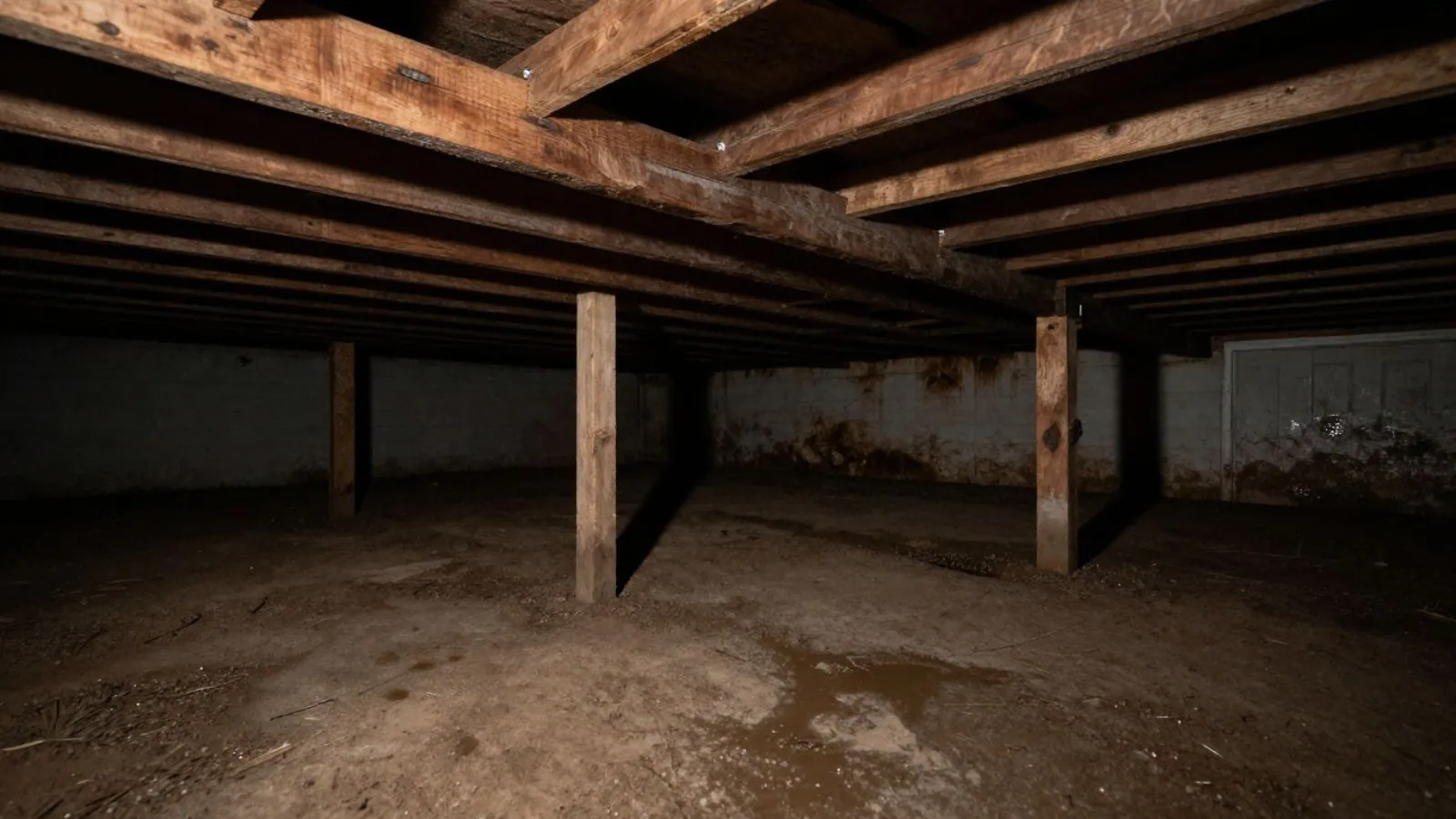
Why a wet crawl space matters
A crawl space sits between the soil and the floor above, which means moisture there reaches framing, insulation and ductwork. In Round Lake, IL a crawl space can take in water from a supply or drain line, from groundwater after heavy rain or from a failed sump. The damage is easy to miss because nobody looks there.
Do not crawl into standing water near wiring or equipment. Look from the access, note the water depth and any pipe that is running, and shut off the main valve if a supply line is leaking. Then call and describe what you see.
What a crawl space inspection covers
The crew checks for standing water, wet insulation, damp joists, a vapor barrier that has been pushed aside and any ductwork sitting in water. Moisture meters and thermal imaging identify wood that has been damp for a long time.
The mechanism is simple. Water lowers the insulating value of fiberglass, holds moisture against wood and raises the humidity of the whole space. Warm indoor air then draws moist air up through the floor, so a wet crawl space can affect the rooms above.
| Condition | What it affects | Usual response |
|---|---|---|
| Standing water | Insulation, ducts, wiring | Pump out, find the source |
| Wet insulation | Joists and subfloor | Remove and dry, replace later |
| Damp joists | Framing | Dry with air movers and dehumidifier |
| Displaced vapor barrier | Ground moisture | Dry, reset or replace the barrier |
| Musty odor | Air quality above | Moisture assessment, mold check |
Call and describe the depth and the source. The dispatcher explains what to avoid.
Drying and repair
After pumping, the crew removes saturated insulation, sets dehumidifiers and air movers and checks readings across joists and the subfloor. Because the space is tight, setup and access shape the labor.
Fixing the source is part of the answer. A plumber repairs leaking lines and a drainage contractor handles grading or sump issues, because drying a crawl space with an active source will not hold. Ask the Village of Round Lake or Lake County whether any exterior drainage work needs a permit.
What changes the cost of crawl space cleanup
The scope and price are explained before work starts.
Groundwater and seepage are commonly excluded from standard homeowners policies, according to the Illinois Department of Insurance, while sudden plumbing failures often are covered. Ask your insurer.
Vapor barriers, ductwork and what else is down there
A crawl space often holds ductwork, plumbing, wiring and insulation, and each reacts differently to water. Flexible ducts that sit in water can collect moisture and need inspection. Plumbing lines may be the source. Wiring and junction boxes in a wet space are a reason to avoid entering until power is checked.
A vapor barrier, usually a plastic sheet over the soil, keeps ground moisture from rising into the space. If it has been moved or torn, ground moisture can add to the problem even without a leak. Reset or replacement is part of the repair after the space is dry.
Why crawl space moisture reaches the rooms above
Warm air rises through gaps in the floor, pulling air from the crawl space with it. That air carries humidity and, if growth has started, odor. People often notice a musty smell in the first-floor rooms before they ever look under the house.
That mechanism is the reason crews check the crawl space whenever a floor feels cold, soft or smells of damp. A moisture reading on the subfloor from above and from below shows whether the problem is local or house-wide.
Serving Round Lake and nearby
The same line covers Ingleside, Fox Lake, Antioch, Island Lake and Spring Grove. Lakefront areas such as Fox Lake often sit on higher groundwater, which can affect a crawl space.
Crawl space water questions
Can you pump a crawl space?
Yes, if it is safe to enter and the water is not near live wiring. The crew checks first.
Will wet insulation dry on its own?
Rarely. Fiberglass that stays wet is usually removed.
Does a wet crawl space mean mold?
Not always, but it raises the risk. A moisture assessment tells you.
Is crawl space water covered by insurance?
It depends on the source. Plumbing failures are often covered and groundwater often is not. Ask your insurer.
The line is answered around the clock. Describe what happened and what you can see.