
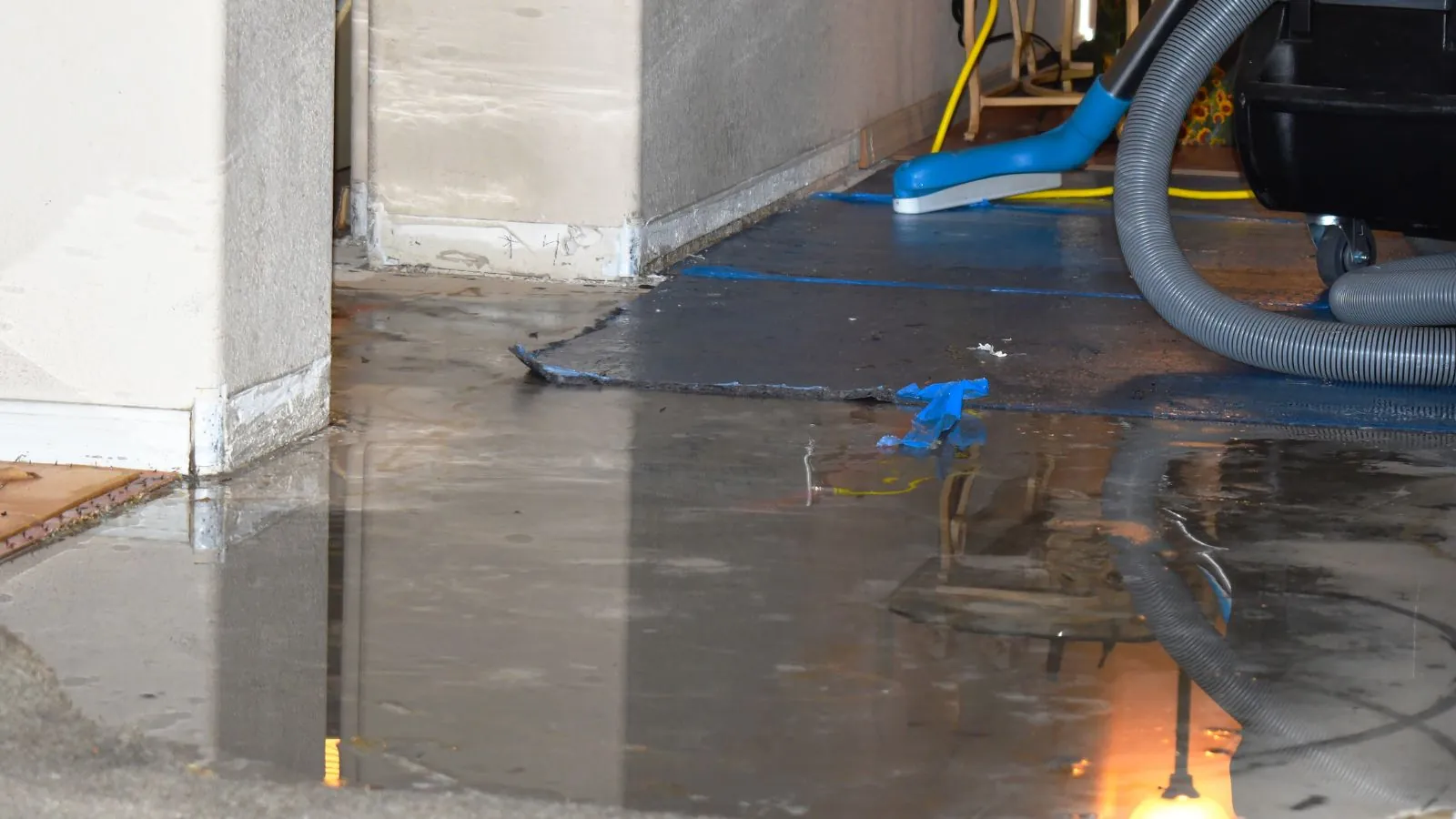
When standing water is an emergency
Water extraction means removing standing water from a home or building with submersible pumps, truck-mounted units or portable extractors. If water is covering the floor in Round Lake, IL, treat it as an emergency, because every hour it sits it moves into drywall, baseboards, cabinet toe kicks and the layers under flooring. The line is open 24/7, including nights and weekends.
While you wait for a crew, stop the source if you can reach the shut-off valve without stepping through deep water. Keep people and pets out of the room, lift valuables and small furniture onto counters, and stay clear of any outlet, cord or panel that is wet or near the water. If the water is rising near electrical equipment, call the utility or 911 before you call the restoration line.
How extraction is done and what it removes
A crew starts by finding the water category. Clean supply water behaves differently from rain or groundwater, and both differ from sewage. The category set by ANSI/IICRC S500 decides what protective gear is needed and which materials can stay.
Pumps handle depth, then weighted extractors and wet vacuums pull water out of carpet, pad and low spots on hard floors. A moisture meter and a thermal imaging camera then show where water has traveled that the eye cannot see, such as the bottom plate of a wall. Extraction ends when the surface water is gone and the building moves to structural drying.
| Situation | What the crew looks at first | Typical extraction method |
|---|---|---|
| Ankle-deep water in a laundry room | Source of the water, washer hoses, floor drain | Submersible pump, then wet vacuum |
| Water through a finished floor | Subfloor moisture, pad and carpet saturation | Weighted extractor and pad lift |
| Rain coming through a foundation wall | Water category, outside grade, sump pump status | Pump and extractor, contents moved |
| Large commercial floor | Slab size, tenant contents, power access | Truck-mounted unit with several wands |
Water that has been sitting for days
People often call after the water has been there for several days, usually because a vacant room or a basement went unnoticed. The water can still be pumped, but the job changes. Carpet pad is usually removed, wood trim and drywall are checked for rot and odor, and the crew watches for mold growth, which federal EPA guidance says can start when materials stay wet beyond the first day or two.
Say how long the water has been standing when you call. It changes the equipment list and the scope, and it lets the dispatcher explain what the assessment will cover before anything is priced.
Describe what you see and where it came from. The dispatcher explains the first steps while a crew is lined up.
Where Round Lake water often starts
Round Lake homes get their water through the Central Lake County Joint Action Water Agency, according to the village's resident guide. That means most indoor flooding here is a house problem, such as a washer hose, a water heater tank, a supply line under a sink or a sump pump that quit.
The village maintains the water and sewer lines in the street, and the line from the curb to your house is the owner's concern, so a leak between the two is a plumber's call as much as ours.
Heavy rain is the other source. Lake County's own hazard report on the July 2017 storm recorded rainfall of roughly 3.4 to 7.2 inches over two days, with flash flooding and sewer backups across the county. That is why a Round Lake basement with a pump, or one without, deserves a plan before the next storm. Basement-specific steps are on the basement water damage page.
What changes the cost of extraction
No two extraction jobs price the same, and the scope and price are explained before work starts. These are the factors that move the number.
Water damage from a sudden, accidental source is often covered by a homeowners policy, while flood and groundwater damage usually needs separate flood coverage. Check your policy or ask your insurer, and photograph the room before anything is moved.
Serving Round Lake and the towns around it
The same dispatch line covers Round Lake, Ingleside, Fox Lake, Antioch, Island Lake and Spring Grove. If you are closer to the chain of lakes, see the notes for Fox Lake, where high lake levels and low ground change the plan. Standing water that is not inside a building, such as a flooded yard or a pool, is a different service, and the dispatcher will tell you honestly if the job is outside what a restoration crew does.
Water extraction questions from Round Lake homeowners
Do you handle water extraction emergencies at night or on weekends in Round Lake?
Yes. The dispatch line is answered 24/7, so a call at 2 a.m. on a Sunday is handled like a call at noon on a Tuesday. Give the address, how deep the water is and whether it is clean supply water, rain or sewage, and the dispatcher explains what happens next. Arrival times are never promised, but nobody is told to wait for business hours.
How is water extraction different from drying?
Extraction removes the liquid water. Drying removes the moisture left in wood, drywall and concrete, using air movers and dehumidifiers over several days. Skipping drying after extraction is how hidden damage and odor develop, so most jobs include both.
Can you pump water out of a yard or a pool?
Usually not. Exterior pumping of yards, pool decks and window wells is a different trade from restoration inside a building. The dispatcher will say so plainly instead of sending a crew for work they do not do.
Will a wet vacuum from the hardware store be enough?
For a small spill of clean water, yes. For water that has gone under flooring or into walls, a shop vacuum removes only the surface, and sewage or flood water should not be handled without protective gear.
Does extraction include drywall and flooring repair?
Extraction is the first phase. Repairs such as new drywall or flooring are scoped separately after drying, and the scope and price are explained before that work starts.
The line is answered around the clock. Describe what happened and what you can see.