
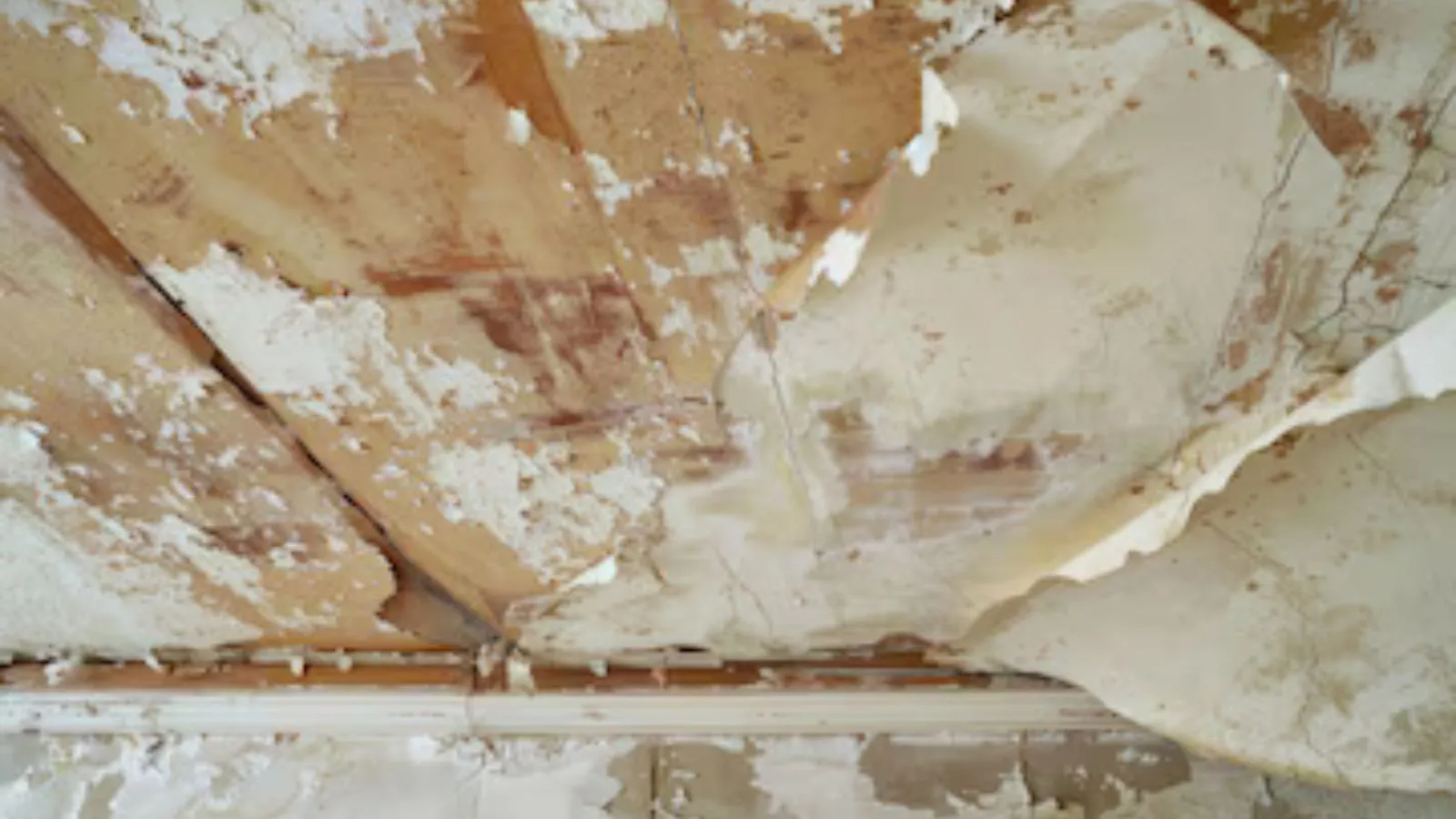
What water does to drywall
Drywall absorbs water and weakens, and paint can bubble, peel or stain. In Round Lake, IL a wall that is wet from a pipe, an appliance or a storm can look fine on one side and be soaked inside the cavity. A stain that returns after painting usually means the moisture source is still active.
Look for stains, bubbling, soft spots and a musty smell. Press gently near the lower edge of the wall. If the board feels soft or crumbles, it is holding water and the cavity needs to be checked.
Dry in place or cut out
Drywall that was wet briefly with clean water can often be dried in place, especially if a wall cavity drying system pushes dry air behind it. Drywall that is soft, has sagged or was wet from sewage or flood water is usually cut out, along with wet insulation.
Cutting out wet drywall high enough above the wet line lets the cavity dry and lets the crew check the framing. A moisture meter and thermal imaging camera guide where to cut. The structural drying page describes the equipment.
| Symptom | What it suggests | Next step |
|---|---|---|
| Brown stain | Past or slow leak | Moisture reading, find the source |
| Bubbling paint | Moisture behind the surface | Check the cavity |
| Soft or crumbling board | Saturated gypsum | Cut out and dry the cavity |
| Baseboard swelling | Water at the wall base | Open the base and dry |
| Musty smell | Hidden moisture | Reading before it spreads |
Call and say which wall and what is behind it. The dispatcher explains what to look for.
Repair, texture and paint
After the cavity is dry, new insulation and drywall go in, joints are taped and finished, and the wall is textured and painted to match. Matching texture on older walls takes care, and the finishing steps need dry time between coats.
Ask for the dry-out and the drywall repair to be scoped separately. If the repair involves changing wiring or plumbing, ask the Village of Round Lake Building Department whether a permit is needed.
What changes the cost of drywall water repair
The scope and price are explained before work starts.
Sudden leaks that wet walls are often covered. Ask your insurer, and photograph the wall before opening it.
Insulation, framing and the wall cavity
Behind the drywall sits insulation, framing and sometimes wiring and plumbing. Fiberglass batts that get wet lose their insulating value and hold water against the wood, so they are normally removed. Framing can usually be dried in place, though wood that has stayed wet for a long time may show staining or softness.
A moisture meter on the studs and the bottom plate shows how deep the water went. If readings are high in the framing, the crew dries it before any new drywall goes up, because closing a wet wall hides a problem you will have to open again.
Matching texture and paint
A repaired wall should disappear. After new drywall is taped and finished, texture is applied to match the surrounding wall, which is a hand skill on older homes with a particular pattern. Primer seals the new board, and paint is applied to a whole wall, not just the patch, to avoid a visible edge.
Plan for drying time between coats, and ask the contractor how long the repair takes. A rushed finish on damp compound can crack. Keep the paint color name and brand for later touch-ups.
Painting and priming wet walls
Paint is not a repair. Primer and paint over a stain can hide it for a few weeks, and a stain that comes back is a sign that water is still there. If a wall has been dried and tested, stain-blocking primer helps keep old marks from bleeding through, and then the finish coat goes on.
Wait until readings confirm the wall is dry, and let new compound cure before painting. Humid rooms such as bathrooms and laundry rooms benefit from moisture-resistant board and a paint made for them.
What the S500 reference says about wet drywall
Gypsum board is porous and the paper facing feeds growth when it stays wet. The S500 describes how materials are dried or removed based on contamination and condition, and it is the basis for cutting out saturated board while keeping board that dries to normal readings.
The ANSI/IICRC S500 Standard for Professional Water Damage Restoration is a published industry reference. It is cited here for background and is not a credential held by this site.
What to do before the crew sees a wet wall
These steps are general safety practice and apply before anyone arrives.
- Shut off the water source and keep outlets in the wall switched off at the breaker if the panel is dry.
- Do not drill or cut the wall yourself, because trapped water can pour out.
- Move furniture a few inches away from the wall.
- Take photos of stains, bubbling paint and any soft spots.
- Mark the edge of the stain with a pencil so growth over time is visible.
Serving Round Lake and nearby
The same line covers Ingleside, Fox Lake, Antioch, Island Lake and Spring Grove. See the burst pipe page if a supply line caused the wet wall.
Wall and drywall questions
Can wet drywall be dried in place?
Sometimes, if it is clean water and the board is still firm. Readings decide.
Why does a stain come back after painting?
The moisture source may still be active, or the wall is still holding water.
How high do you cut drywall?
Above the visible wet line, based on moisture readings.
Is drywall water damage covered?
Sudden leaks are often covered. Ask your insurer.
The line is answered around the clock. Describe what happened and what you can see.