
Why kitchen leaks spread
A kitchen has several water sources in a small space, which is why a leak in Round Lake, IL can wet cabinets, flooring and the next room at once. A supply line under the sink, a dishwasher hose or a refrigerator line can all release water into the cabinet base, and from there it moves across the floor and under the toe kick.
Close the valve under the sink or behind the appliance, empty the cabinet and photograph the area. Do not use the dishwasher or sink until the source is found.
Cabinets, floors and what can be saved
Cabinet bases made of particleboard swell and fail when they are wet for long, while solid wood and plywood often dry. Floors depend on type. Tile and sealed vinyl dry quickly on top, but water can sit under them and in the subfloor. Laminate and engineered wood swell at the seams.
A moisture meter and thermal imaging camera show what is wet under the surface. The crew then decides which cabinets, toe kicks and floor sections to remove. If the leak started from an appliance, the appliance repair is a separate step.
| Material | If wet briefly | If wet long |
|---|---|---|
| Particleboard cabinet base | Sometimes dried | Usually replaced |
| Plywood or solid wood cabinets | Usually dried in place | Checked for rot |
| Tile floor | Cleaned and dried | Subfloor checked |
| Laminate or vinyl plank | Lifted and dried if possible | Usually replaced |
| Drywall behind cabinets | Dried with cavity equipment | Cut out and replaced |
Call and describe the source and flooring. The dispatcher explains what to document.
Drying and rebuild
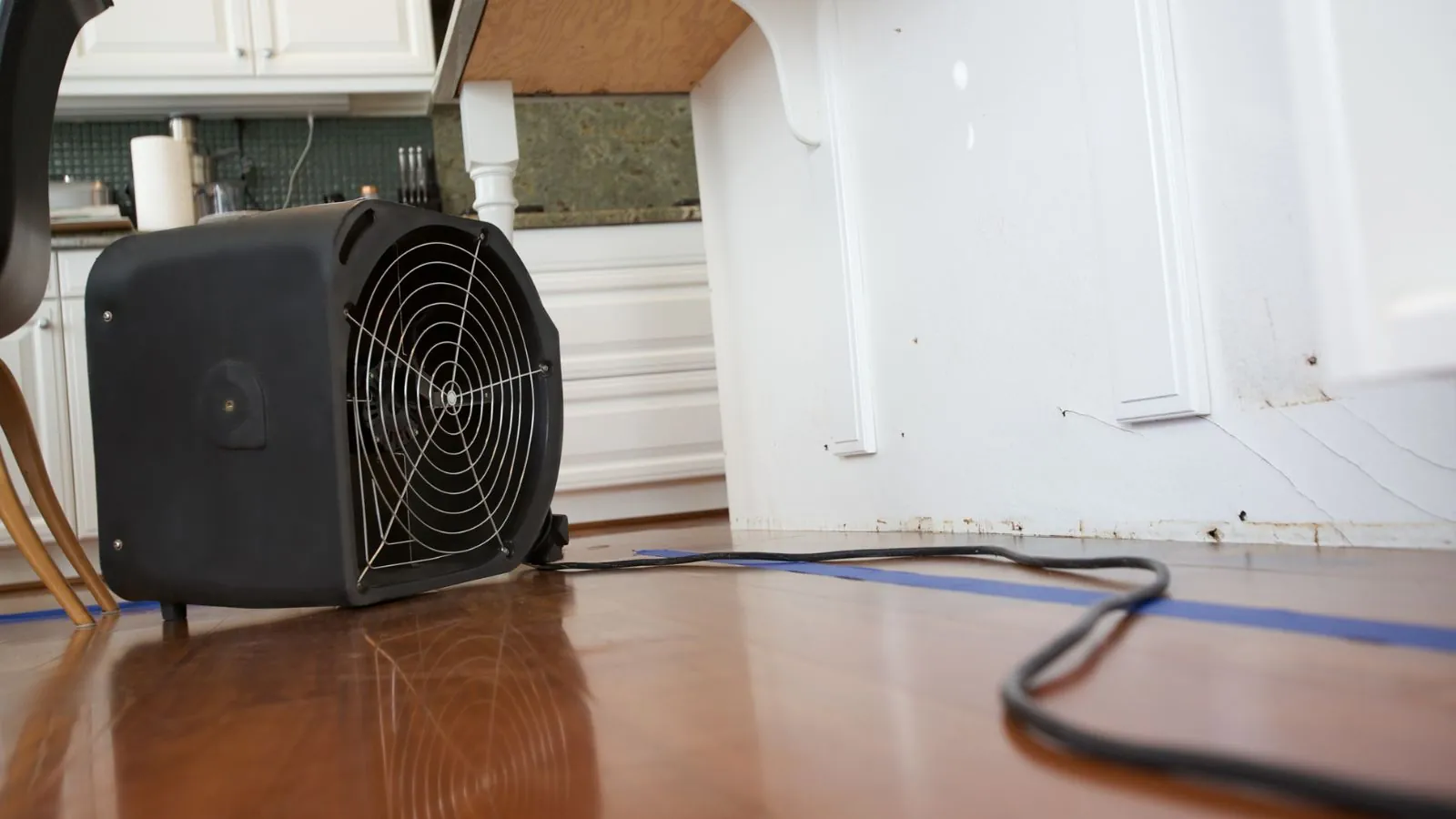
Drying comes before repair. The crew removes wet toe kicks, opens the base of walls where needed and runs air movers and dehumidifiers until readings are dry. The rebuild then replaces what could not be saved, such as flooring, cabinet parts and drywall.
Ask for the dry-out and the rebuild to be scoped separately. If cabinet or plumbing work is involved, ask the Village of Round Lake Building Department whether a permit applies.
What changes the cost of kitchen water damage
The scope and price are explained before work starts.
Sudden kitchen leaks are often covered, while slow leaks often are not. Ask your insurer, and keep the failed part.
Common kitchen sources
Kitchens have more water sources than any other room. A dishwasher supply line, the drain under the sink, a faucet connection, a refrigerator ice maker line and a garbage disposal can each fail. Some fail suddenly and some drip for weeks inside a cabinet where nobody looks.
If you find a wet cabinet base, empty it, find the source and take photos. A moisture meter on the floor of the cabinet and on the back of the dishwasher panel shows how far the damage has gone. A plumber repairs the line and the crew dries what got wet.
Countertops, backsplashes and appliances
Stone and solid-surface counters usually survive, but the cabinet under them may not. If cabinets must come out, the counter has to be lifted, which adds work and risk of damage. Tile backsplashes can hide water behind them, and a hollow sound or loose tile is a clue.
Appliances should be unplugged and moved only if it is safe. A refrigerator that sat in water may need a technician before it is used again. Keep model and serial numbers for your insurer.
Planning the kitchen while it dries
A kitchen out of service is a household problem. Plan for meals while the floor and cabinets dry, and move food from any refrigerator that has to be moved. Ask the crew how long the room will be blocked, which appliances must come out and when they can go back.
Keep the dishwasher and sink off until the source is fixed. If cabinets are being replaced, ask the supplier about lead times early, because custom cabinets can take weeks, and the drying and rebuild schedule may depend on them.
How the S500 reference sorts kitchen water
Kitchens produce more than one kind of water. A supply line is clean, a dishwasher drain is not, and a sink backup can carry sewage. The S500 sorts contamination into categories, and that sorting decides whether cabinets and subfloor can stay.
The ANSI/IICRC S500 Standard for Professional Water Damage Restoration is a published industry reference. It is cited here for background and is not a credential held by this site.
Serving Round Lake and nearby
The same line covers Ingleside, Fox Lake, Antioch, Island Lake and Spring Grove. See the burst pipe page if a supply line is the cause.
Kitchen water damage questions
Can wet cabinets be saved?
Sometimes. Plywood and solid wood often dry, while particleboard often does not.
How long before I can use the kitchen?
It depends on the drying and rebuild scope. The crew explains the plan after readings.
Should I remove the toe kick myself?
It helps drying, but a crew can do it with less risk to the cabinets.
Is kitchen leak damage covered?
Sudden leaks are often covered. Ask your insurer.
The line is answered around the clock. Describe what happened and what you can see.